Business Plan

Hyperpressed Brick Production in the Czech Republic

Environmentally friendly and energy-efficient production of building materials, compliant with European Union standards and “green” construction programs.

Project Summary

70 %
Reduction in CO₂ emissions
No Analogues
On the German market
High Profitability
(to be specified)
EU Standards
and Green Construction Programs

Company Description

  • Legal Base: Company registered in the Czech Republic
  • Legal Form: S.r.o.
  • Company Name: 4Bricks
  • Location: Prague
  • Mission: Transition of the construction industry to sustainable materials through innovation

Team

  • Dmytro Levchenko — Technical Director
  • Sergii Latanskyi — Financial Director
  • Devid Homa — Sales Manager
  • Kevin Beresh — Product Promotion in Target Markets (Czech Republic, Germany, EU)

Product Description

Strength
M100–M300 kg/cm²
Frost Resistance
F150–F300
Water Absorption
3–5 %
Eco-Friendliness
Use of recycled raw materials

Advantages over traditional brick:

  • 40 % lower energy consumption in production
  • Precision geometry (±0.5 mm) allows mortar savings

Sustainability and Standards

  • Certification: Products certified under EU standards
  • Certificates: EN 771-3, Blue Angel (expected in 2025)
  • Carbon footprint: 70 % lower than traditional brick
  • Production cycle: Use of up to 90 % recycled raw materials

Target Market

RegionIndustry TurnoverGrowth
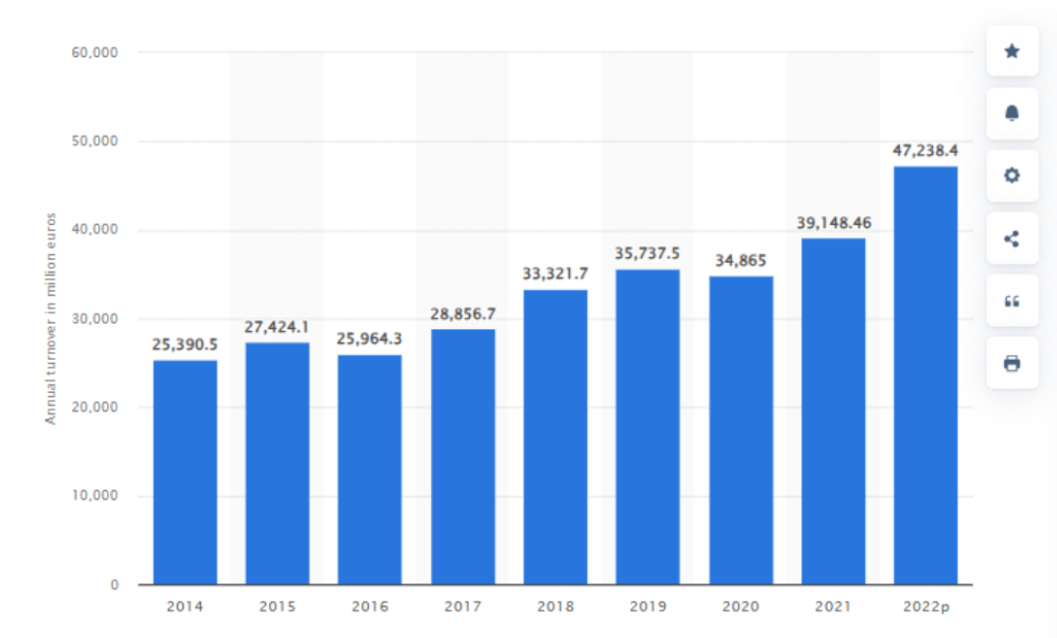
Czech Republic (2022)€8.1 billion+20.66 %

Source: Statista

Demand for energy-efficient construction:

According to the EU Directive on the Energy Performance of Buildings (EPBD), since 2021 all new buildings in EU countries must be nearly zero-energy (nZEB — nearly Zero-Energy Buildings).

  • Requires EU countries to implement nZEB standards
  • Links building permits to energy efficiency compliance
  • Encourages the use of innovative building materials
  • Supported by EU funding and national programs
Challenges of the Construction Industry in the Czech Republic

1. Labor Shortage

The construction sector faces a shortage of qualified personnel, leading to delays and increased project costs.

2. High Cost of Materials

Prices for bricks, cement, and other traditional materials continue to rise, increasing the overall cost of construction.

3. Long Construction Timeframes

Traditional construction methods take considerable time, especially for masonry and installation of structural elements.

4. Strict Environmental Standards

Stringent environmental requirements increase costs for designing and implementing eco-friendly solutions.

Features and Applications

Strength Characteristics

High load resistance and durability.

Perfect Geometry

Accurate dimensions and shape ensuring easy installation.

Applications

  • Building facade cladding
  • Construction of internal walls for low-rise buildings
  • Partition walls, fences, and garages
  • Agricultural facilities
  • Warehouse construction
  • Other architectural and construction tasks
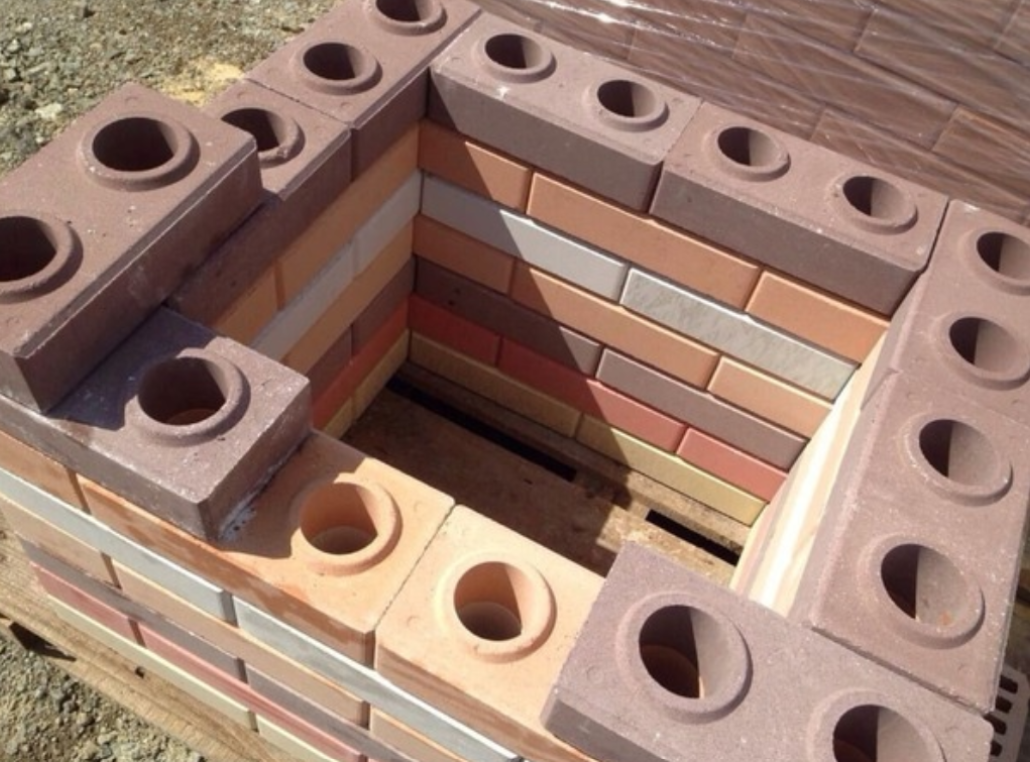
Brick example 1 Brick example 2

Technical Specifications

NameDimensions (mm)Type
1Standard Brick250 × 125 × 65Hollow
2Grooved Brick250 × 125 × 65Hollow
3Ridge Brick250 × 125 × 65Solid

Sales Market

  • 0–12 months: entry into the local Czech market
  • 12–18 months: expansion into the EU market (Germany, Netherlands, France)
  • Long-term: export beyond Europe

Market Analysis

Czech Republic: increasing interest in eco-friendly materials, projected construction growth +3% annually (2025–2028).

Germany: expected growth of the “green” building materials market by more than €11 billion by 2029.

Demand Forecast

  • Target production capacity: 35,200+ bricks per month
  • Average selling price: €1.50 per brick
  • Product type: single-row hollow brick (250 × 125 × 65 mm)

Applications

  • Facade cladding
  • Walls and partitions
  • Landscape design
  • Interiors
  • Industrial and warehouse facilities

Seasonality of Sales in the Czech Republic

MonthSales Activity (%)Comment
January10%Construction almost frozen
February15%Season preparation
March40%Project launches
April70%Mass start
May90%Peak demand
June100%Maximum activity
July95%High demand
August90%Slight decrease
September80%Season wrap-up
October50%Shift to logistics
November25%Finishing works
December15%Final shipments

Equipment

🧰 Equipment

The production of hyperpressed bricks is based on the use of hydraulic presses, ensuring high product quality and productivity.

Technological Equipment: Press

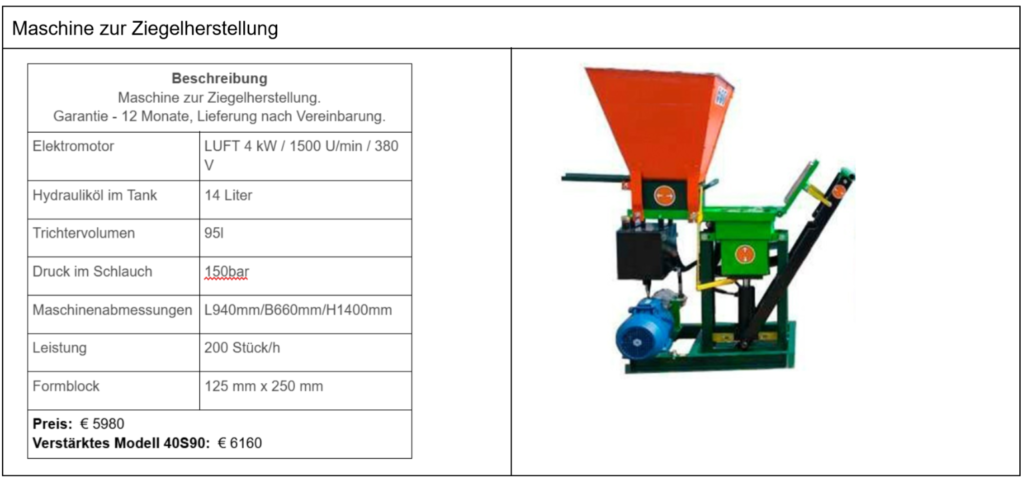
The press “5BRICKS” produces up to 200 bricks per hour using the semi-dry pressing method. It is simple to operate, safe, economical, and reliable.

Scope of Supply:

  • Two molds:
    • Standard LEGO brick with reinforcement groove
    • Special mold for lintels and channels (pipes, cables)
  • Continuous adjustment of loading volume and pressing of bricks up to 88 mm in height

Features:

  • Mold change: 5–10 minutes
  • Products meet state standards with proper technology application
  • Technical specifications: see table

Additional Equipment

  • 🔧 Brick-making machine
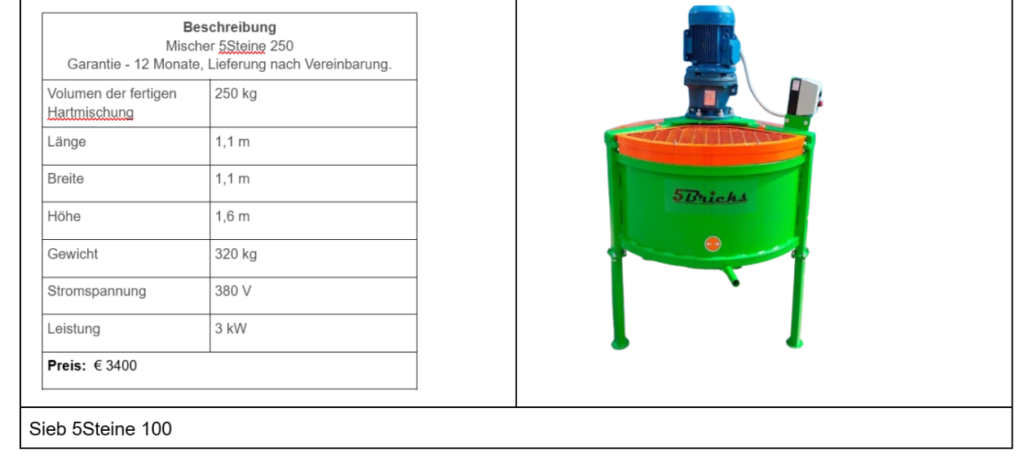
  • 🔄 5Steine 250 Mixer
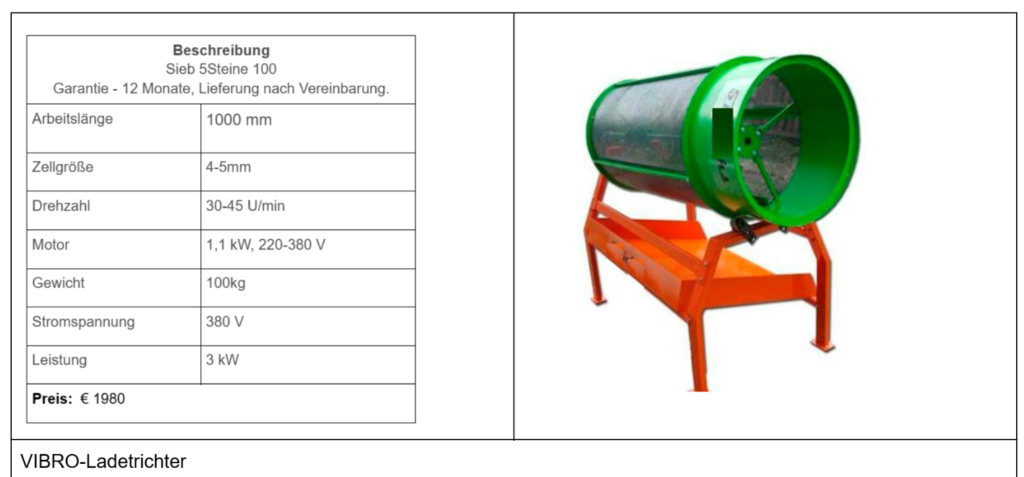
  • 🧹 5Steine 100 Sieve
  • 📥 VIBRO loading hopper
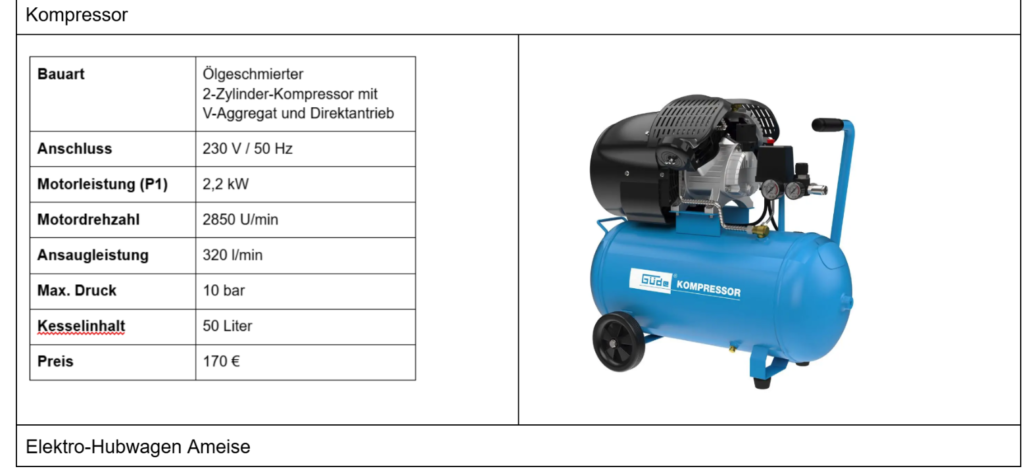
  • 💨 Compressor
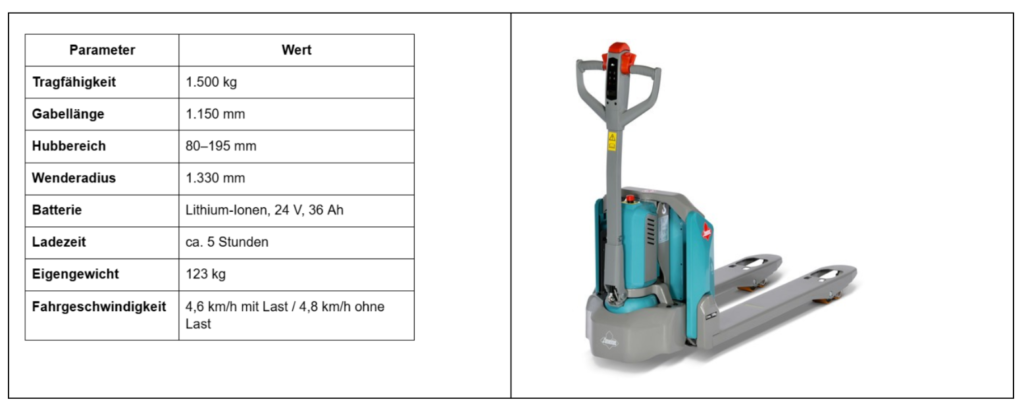
  • 🚛 Electric stacker (Ameise)

Table 1: Equipment

ItemQuantityCost (€)
Press machine15,083.00
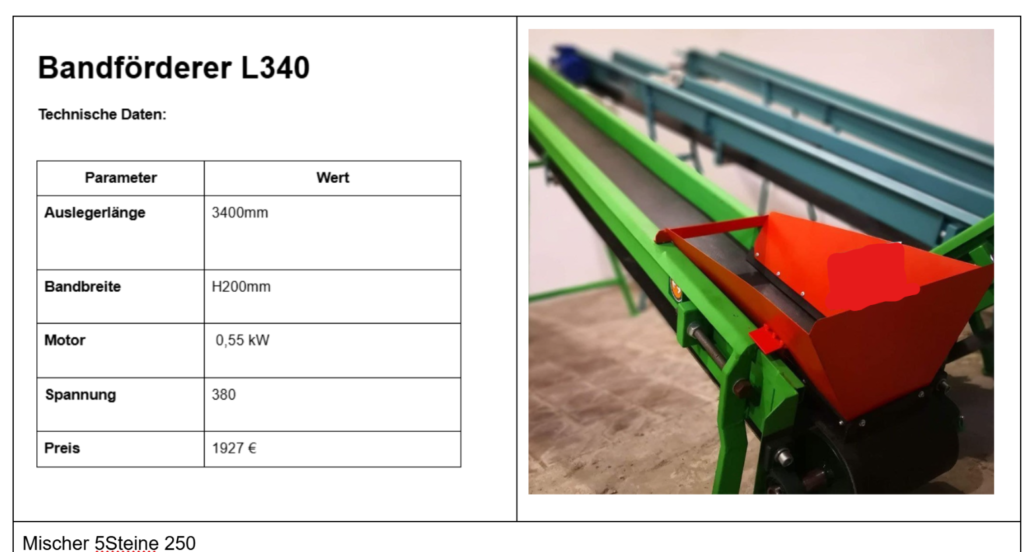
Belt conveyor L34011,927.00
Mixer12,890.00
Vibrating sieve11,683.00
Compressor1170.00
Loader11,500.00
Total (including -15% discount)11,265.00

Table 2: Power Consumption

ConsumerQtyPower (kWh)FactorShift (8h)Month (22 days)€/kWh€/shift€/month
Press14.00.928.8633.60.226.34139.39
Mixer13.00.716.8369.60.223.7081.31
Sieve10.50.72.861.60.220.6213.55
Conveyor10.50.72.861.60.220.6213.55
Compressor10.40.72.2449.280.220.4910.84
Lighting-1.00.75.8123.20.221.2827.10
Total58.481,287.06.43220.80

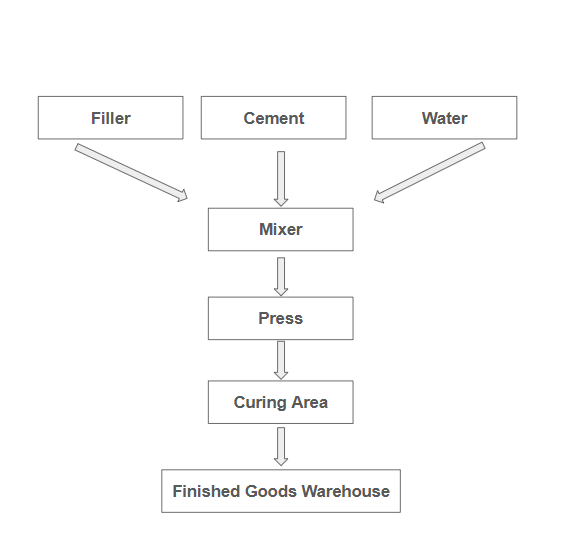
Production Line Stages

  • Raw material storage
  • Concrete mix preparation unit
  • Molding unit
  • Initial brick curing area
  • Finished product warehouse

Technical Specifications

  • Size: 250 × 125 × 65 mm (standard, hollow or solid)
  • Weight: ~3.5 kg
  • Composition: cement, limestone screenings, water, plasticizer
  • Color: standard grey, colored versions available
  • Production capacity: up to 35,200 bricks per month
  • Lead time: 5–7 working days for standard volume

Standards and Documentation

  • EN 771-3
  • Blue Angel (certification in process)
  • Warranty obligations
  • Technical data sheet
  • Adaptation for tender documentation available

Advantages in the Czech and EU Context

4Bricks Hyperpressed Brick — an innovative material for energy-efficient and eco-friendly construction across the Czech Republic and the European Union.

  • Frost resistance F150–F300: suitable for regions with harsh climates (Czech Republic, Germany, Poland)
  • Sustainability: 70% CO₂ reduction, recycled materials
  • Cost-efficiency: ±0.5 mm geometry reduces mortar consumption by up to 30%
  • Aesthetics: smooth texture, coloring options, suitable for facades and interiors
  • Innovation: optional channels for reinforcement, wiring, and utilities

Logistics and Packaging

  • Delivered on pallets (336–420 pcs per pallet)
  • Packaging: stretch film, branded labeling
  • Distribution across the Czech Republic and EU
  • Support for project calculations and documentation

Conclusion

4Bricks Hyperpressed Brick is a strategically important material for new European construction standards. It combines sustainability, durability, and precision, making it ideal for both public and private projects.

  • Municipal clients
  • Developers
  • Construction contractors
  • Architects and design offices

Stages of the Technological Process

1. Raw Material Storage

Raw materials (cement, fillers — sand, clay, limestone screenings, pigments) are delivered to the mixing preparation area.

2. Preparation of the Concrete Mix

  • Crushing and sieving of dry filler
  • Dosing and loading of filler into the mixer
  • Dosing and loading of cement and additives
  • Moistening of the mix

3. Molding

The prepared mix is fed into the press hopper. The mix should not sit idle for more than 15–20 minutes.

4. Pressing

The forming process is carried out under a pressure of 10–15 tons, which ensures precise shaping and high strength of the finished brick.
Finance and Cost Price

Table 3. Cement Prices in the Czech Republic and Germany

Cement GradeVolumeCzech Republic (CZK)Czech Republic (EUR)Germany (EUR)
CEM II 32,5 R1 kg5.020.200.60
25 kg125.455.0214.90
1 t5 020200.80600
CEM I 42,5 R1 kg6.30–6.380.25–0.260.79
25 kg157.69–159.436.30–6.3819.80
1 t~6 300–6 380~252–255~790

Table 4. Cost of Producing One Brick

Proportions cement : sand = 1:5. Including plasticizer and pigment

IndicatorWeight per 1 brick (kg)For 1,600 bricksFor 35,200 bricks€/kg€/pc€/1,600€/35,200
Cement0.58393320,5220.220.128204.804,505.60
Sand2.9174,667102,9410.020.05892.802,041.60
Plasticizer C-30.00294.664102.612.000.00589.28204.16
Pigment0.00121.9242.240.230.000280.459.86
TOTAL3.5 kg0.19307.336,761.22

* Without pigment, the cost price decreases by approximately 3%

Table 6. One-Time Costs

ItemAmount (€)Description
Equipment11,265Press, mixer, sieve, conveyor
Delivery to Germany1,000Transport costs
Customs services3,000Services
Compressor + equipment160Compressor
Tools310Shovels, buckets, wheelbarrow, consumables
Protective equipment100Shoes, clothing, glasses, headphones
Loader, pallets, drying1,400
TOTAL17,235

Table 7. Marketing, Certification, Equipment

ItemAmount (€)Description
Website and social media500Landing page + social media (FB, IG, LinkedIn)
Domain and hosting1001 year
Certification2,000EN 771-3, laboratory
Office equipment200Printer, MFP
TOTAL2,800Or €2,700 including hosting

Total One-Time Costs: €20,035

Monthly Expenses and Seasonal Calculation

Table 8. Payroll Fund

PositionHeadcountGross (€ / month)Total (€ / month)Employment Type
Manager12,4002,400Staff
Press Operator11,2001,200Staff
Mixer Operator11,2001,200Staff
Marketer1500500Outsourcing
Accountant1500500Outsourcing
TOTAL55,800

Table 10. Equipment Depreciation

Equipment depreciation: 5% per year = €661.60 / year or €55.13 / month.

Table 11. Insurance Expenses

CategoryCzech Republic (CZK/year)Czech Republic (€)
Equipment30,000~1,200
Corporate Liability12,000~480
TOTAL42,000~1,680

Marketing Budget

Target AudienceChannelDescriptionMonthly Budget (€)Annual Budget (€)
B2CFacebook / Instagram AdsDIY targeting2002,400
YouTube + ContentVideos, reviews1501,800
B2BEmail Campaign + PDFCatalogs, email1001,200
Professional MediaStavitel, ČKA1001,200
AllSEO + WebsiteOptimization, blog1001,200
Google AdsRetargeting1001,200
ExhibitionsTwice a year2,500
TOTAL750~11,500

* Raw material delivery ≈ €0.50/km. Plan: 5 deliveries per month.

Raw Material Volume Calculation Considering Seasonality

MonthActivity (%)Production (pcs)Raw Material Weight (kg)Raw Material Weight (t)Comment
January10%3,52012,35512.36Warehouse shipments
February15%5,28018,53318.53Season preparation
March40%14,08049,45349.45Project launches
April70%24,64086,48686.49Mass construction
May90%31,680111,197111.20Peak season
June100%35,200123,552123.55Maximum activity
July95%33,440117,364117.36Private sector
August90%31,680111,197111.20Activity decrease
September80%28,16098,84298.84Season completion
October50%17,60061,77661.78Warehouse period
November25%8,80030,88830.89Minimal construction
December15%5,28018,53318.53Final shipments
TOTAL269,440939,177939.18

Seasonality of Brick Sales in the Czech Republic

Key Findings

  • Peak sales: April–August (especially May–July)
  • Stock purchases: February–March and October
  • Lowest activity: January and December

Strategic Focus:

  • B2C: promotion of facade solutions — autumn
  • B2B: tenders are planned in winter, launched in spring

Cost Structure

1. One-time (capital) expenses

  • Equipment: press, mixer, screener, etc.
  • Delivery and customs: logistics and clearance
  • Commissioning: line installation
  • Tools: shovels, buckets, protection
  • Handling equipment: stacker
  • Drying equipment: pallets, panels
  • Marketing: website, social media
  • Certification: EN 771-3, eco-labels
  • Office: equipment, furniture

2. Operational monthly expenses (OPEX)

  • Raw materials: cement, sand, pigment, plasticizer
  • Payroll: manager, operators, accountant
  • Energy: equipment, lighting
  • Rent: workshop, warehouse, office
  • Transport: 5 deliveries/month at €0.50/km
  • Maintenance: oil changes, parts replacement
  • Insurance: liability and equipment
  • Utilities: water, inventory
  • Marketing: promotion, exhibitions
  • Depreciation: 5% per year

3. Cost Classification

CategoryType€/month (100%)Comment
Raw materialsVariable6,761Depends on volume
PayrollFixed5,800Constant staff
RentFixed600Unchanged
EnergyVariable221By shifts
LogisticsVariable100Raw material transport
Insurance (equipment)Fixed100Allocated
Insurance (liability)Fixed40
MarketingFixed750Promotion
DepreciationFixed555% per year

4. Monthly Expenses Considering Seasonality

MonthLoad (%)Production (pcs)Raw Materials (€)Salaries (€)Energy (€)Rent (€)Marketing (€)Other (€)Total (€)
January10%3,5201,4332,4001396003008005,672
February15%5,2802,1502,4001806003008006,430
March40%14,0805,7404,8002206005001,20013,060
April70%24,64010,0404,8002206007001,30017,660
May90%31,68012,9004,8002206007001,30020,520
June100%35,20014,4304,8002206007001,30022,050
July95%33,44013,7104,8002206007001,30021,330
August90%31,68012,9004,8002206007001,30020,520
September80%28,16011,5404,8002206006001,20019,160
October50%17,6007,2204,8002006005001,00015,120
November25%8,8003,6102,4001806004009008,090
December15%5,2802,1502,4001506004008006,500
TOTAL175,112

Marketing Strategy

Target Audience

  • B2B: construction companies, architects, developers
  • B2C: private builders (cottages, townhouses)
  • B2G: government and municipal clients

Unique Selling Proposition

  • Fast masonry due to precise geometry
  • Mortar savings thanks to perfect shape
  • High strength, aesthetic appearance, frost resistance
  • Eco-friendly: no firing, low CO₂ emissions

Sales Geography

  • Main markets: Czech Republic, Germany (Bavaria)
  • Additionally: Austria, Slovakia, southern Poland

Promotion Channels

AudienceChannelsExamples
B2BExhibitions, newsletters, mediaFor Arch, BAU, Stavitel, BauNetz
B2CSocial media, YouTube, SEOFacebook, YouTube (video case studies)
B2GTender platforms, forumsNEN, TenderArena, Zelená úsporám

Key Performance Indicators (KPIs)

  • Increase website leads by +20% per quarter
  • Participate in at least 3 industry exhibitions per year
  • Engage 5+ architectural bureaus as partners
  • Participate in 10+ tenders annually
  • 50,000+ reach of advertising campaigns on social media

Cash Flow 2025

MonthSales (pcs)Revenue (€)Materials (€)Salaries (€)Other (€)Total Costs (€)Profit (€)Cumulative Profit (€)
January3,5205,2806765,8001,8668,342-3,062-3,062
February5,2807,9201,0145,8001,8668,680-760-3,821
March14,08021,1202,7055,8001,86610,37110,7496,927
April24,64036,9604,7315,8001,86612,39724,56331,491
May31,68047,5206,0825,8001,86613,74833,77265,263
June35,20052,8006,7585,8001,86614,42438,376103,639
July33,44050,1606,4135,8001,86614,07936,081139,719
August31,68047,5206,0825,8001,86613,74833,772173,492
September28,16042,2405,4075,8001,86613,07329,167202,659
October17,60026,4003,3795,8001,86611,04515,355218,014
November8,80013,2001,6905,8001,8669,3563,844221,859
December5,2807,9201,0145,8001,8668,680-760221,099

Scaling Potential

  • Modular equipment
  • Process automation
  • Option to launch 2 shifts or a second line

Conclusion: increasing capacity without significant capital investment makes the project suitable for franchising and EU-wide expansion.

Risks and Mitigation Measures

1. Supply Chain

Issue: delays and rising costs

  • Long-term contracts
  • Strategic reserve (1–2 months)
  • Diversification (2–3 suppliers)
  • Real-time monitoring

2. Workforce Qualification

Issue: shortage of trained staff

  • Regular training and mentorship
  • Equipment supplier training
  • Motivation and internal certification system
  • Automation of routine processes

3. Equipment Failures

Issue: production downtime

  • Scheduled maintenance plan
  • Spare parts in stock
  • Warranty and urgent service
  • Diagnostics and remote monitoring

SWOT / PESTLE Risk Analysis

RiskCategoryProbabilityImpactMitigation Measures
Raw material price fluctuationsEconomicHighIncreased production costLong-term contracts, hedging, local suppliers
Demand changesMarketMediumSales declineMarket monitoring, flexible pricing, marketing
Supply chain disruptionsTechnologicalMediumProduction delaysReserves, multi-channel suppliers, IT monitoring
Tightening of environmental regulationsLegalLowCost increaseEarly certification, eco-technologies
Rising competitionMarketMediumLoss of market shareUSP, branding, innovation
Currency fluctuationsEconomicMediumHigher raw material costHedging, settlements in € and CZK
Labor shortageSocialLowReduced production paceTraining, motivation, automation
Regulatory delaysPolitical/LegalMediumProject launch delaysLegal support, industry associations

Financial Requirement

Required investment amount: €98,000

Structure

  • €78,000 — operating expenses for the first 7 months (raw materials, rent, salaries, logistics, insurance, marketing)
  • €20,000 — capital expenditures (equipment, certification, website, marketing)

The investment ensures 7 months of operations without dependency on revenue.

Investment Return Plan

  • Stable profitability: from month 5–6
  • Break-even point: by month 8–9
  • Full return: within 14–16 months
  • Horizon: 3 years with potential dividend policy

Investment Attraction Format

  • Goal: launch and operational sustainability
  • Participation term: 36 months (early exit possible)
  • Model: under discussion — repayment + fixed return or equity participation
Conclusion: an investment of €98,000 is required for a safe launch and to reach profitability within a realistic timeframe. The project is highly profitable and offers potential for scaling and dividend growth within the first 1.5 years.

📬 Contacts

Scroll to Top