Hyper-Pressed Construction Products
4Bricks Hyper Press
4Bricks is a product direction of the ECOS platform implementing the segment of hyper-pressed mineral construction products. The technology is based on the hyper-pressing method without firing and allows the production of strong, geometrically precise and environmentally oriented materials for construction projects in the Czech Republic and the EU.
The engineering base of ECOS предусматривает использование минеральных композиций со сниженной долей клинкерсодержащих компонентов и возможностью применения вторичного минерального сырья. Это обеспечивает стабильные механические характеристики, точность геометрии и соответствие современным требованиям европейского строительного рынка.
Product ArchitectureKey Principle
Hyper-pressing allows the production of mineral construction products without the firing stage, reducing energy consumption and CO₂ emissions. The technology provides high geometric accuracy, stable strength and efficient industrial scalability.
Hyper Press Architecture
The Hyper Press segment of the ECOS platform implements industrial production of hyper-pressed mineral construction products. The technology is based on the use of mineral composites and high-pressure forming, which ensures high strength, precise geometry and stable performance characteristics of the materials.
Mineral Composition
The products are based on mineral components including limestone, dolomite and mineral screenings. The composition is optimized to ensure strength, durability and resistance to climatic influences.
Hyper-Pressing Technology
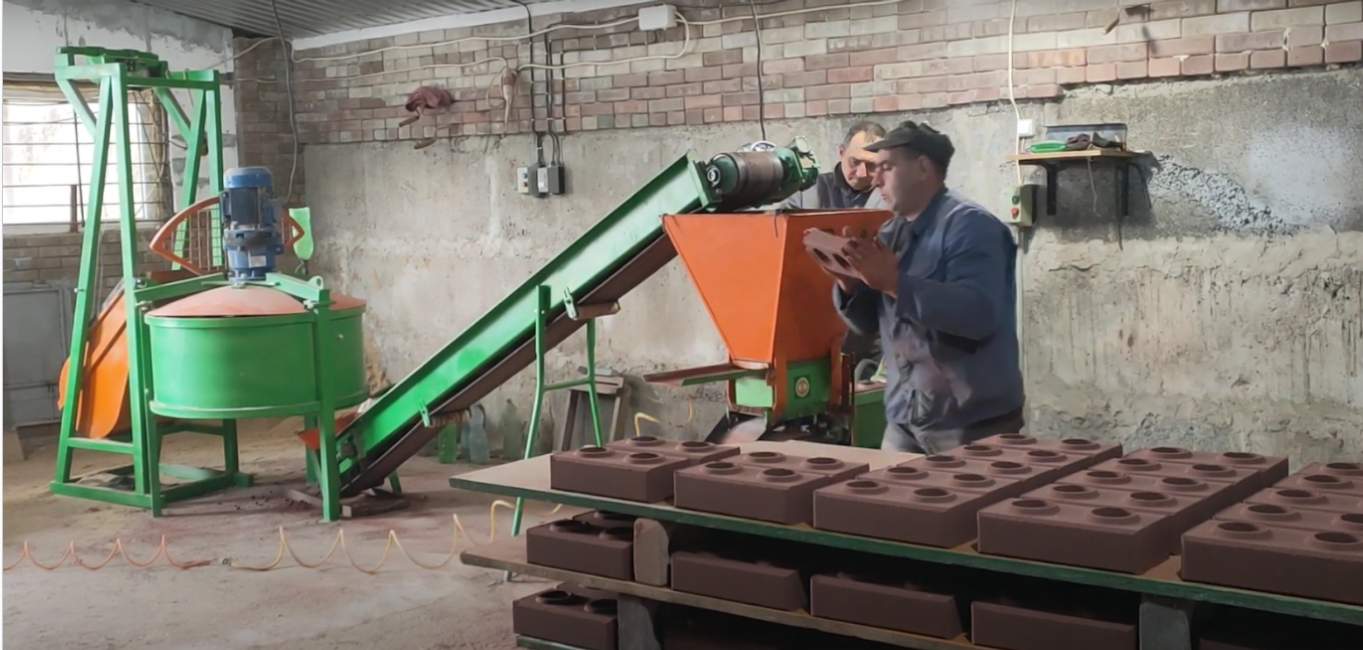
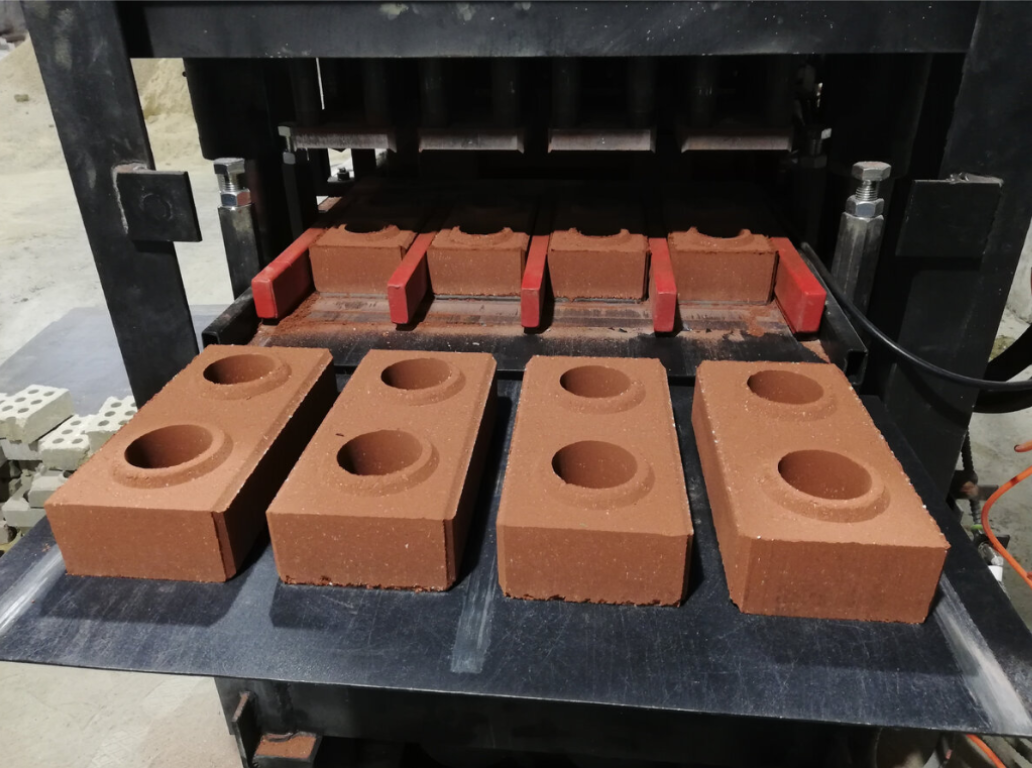
The products are formed using the hyper-pressing method under high pressure without a firing stage. This allows reduced energy consumption and a lower carbon footprint in the production process.
Precision Geometry
The technology ensures high dimensional accuracy and stable geometry of the products. This accelerates the masonry process and reduces the consumption of masonry mortars during construction.
Integration into ECOS
The Hyper Press segment is part of the ECOS technological platform and integrates with other system directions, including dry mixes and engineering solutions for construction projects.
Types of Hyper Press Products
The Hyper Press segment of the ECOS platform includes several categories of hyper-pressed construction products designed for construction, architectural solutions and infrastructure projects. The materials are characterized by high strength, precise geometry and stable performance properties.
Hyper-Pressed Bricks
Industrial-grade mineral construction bricks designed for building wall structures, facades and architectural elements with high dimensional precision and stable strength.
Paving Elements
Hyper-pressed paving elements for private, commercial and infrastructure projects. They provide resistance to loads, frost durability and long service life of the pavement.
Architectural Elements
Facade and decorative mineral elements used for architectural solutions, building cladding and public spaces within modern construction projects.
Application Areas
Technological Requirements
- Installation of the products must be carried out in accordance with the manufacturer's technical recommendations
- The substrate must comply with construction standards and be properly prepared before work begins
- Appropriate masonry mortars should be used to ensure structural strength
- All work must be performed in compliance with temperature and technological construction conditions
Platform Architecture ECOS
LICENSE
PRESS
MIXES
SYSTEMS
🌍 Mission
We create innovative construction solutions with a focus on eco-friendliness, precision, and adaptation to EU standards.
🔬 Technology
Our product is manufactured using a hyperpressing method without firing, utilizing recycled raw materials and ensuring precise geometry of ±0.5 mm.
📍 Geography
We are based in the Czech Republic and plan to scale across Europe — starting with Germany, Austria, and Slovakia.
💡 Our Advantages
4Bricks is not just a brick. It is a new approach to construction where technology, sustainability and economic efficiency are combined.
♻️ No Firing
Energy savings and up to 70 % reduction of the carbon footprint. Recycled mineral materials are used.
📐 Precise Geometry
Deviation not more than ±0.5 mm. This accelerates masonry and reduces mortar consumption by up to 30 %.
🏗️ Strength
Frost resistance F150–F300, strength up to M300. A reliable solution for facades and load-bearing walls.
🎯 Project Adaptation
Possibility to integrate channels for reinforcement and utilities. Compatible with BIM and tender requirements.
🎨 Aesthetics
Smooth texture and coloring options. The brick can be used both in interior design and on building facades.
🚛 European Logistics
Delivery across the Czech Republic and the EU, fast packaging, pallet supply and project-based calculations.
Gallery
❓ Frequently Asked Questions
Answers to the most common questions from clients and partners.
🧱 What is the difference between hyper-pressed brick and conventional brick?
Our bricks are produced without firing. This preserves natural resources, reduces CO₂ emissions and at the same time provides high strength and aesthetic quality. It is an environmentally responsible and dimensionally precise material of a new generation.
📦 How are delivery and packaging organized?
Products are delivered on pallets (336–420 units). The goods are wrapped in stretch film with branded marking. Delivery is available throughout the Czech Republic and EU countries.
📐 Can bricks be produced in custom sizes?
Yes. We can develop molds for the required shape and dimensions depending on the project. Options with channels for reinforcement and utilities are also possible.
📄 What documentation do you provide?
Each batch is supplied with a technical passport, conformity documentation (EN 771-3) and, when required, adaptation for tender documentation.
🏗️ Is your product suitable for public sector projects?
Yes. Our bricks comply with EU standards and environmental requirements (Blue Angel certification in progress), which makes them suitable for B2G projects.
🧱 Overview of Features
What is a Lego Brick?
A brief overview of the material, technology, and its unique features
Lego brick is a modern building block produced by pressing without firing. It is based on cement mixtures and natural mineral components. This approach makes production eco-friendly, and the brick itself strong and geometrically precise.
⚙️ Production Technology
Manufactured from a cement-lime or cement-sand mixture with the addition of dolomite, travertine, and other natural components. Production without firing reduces costs and preserves natural resources. High-pressure pressing and drying allow for a high-strength block without the use of high temperatures.
🔗 Design and Features
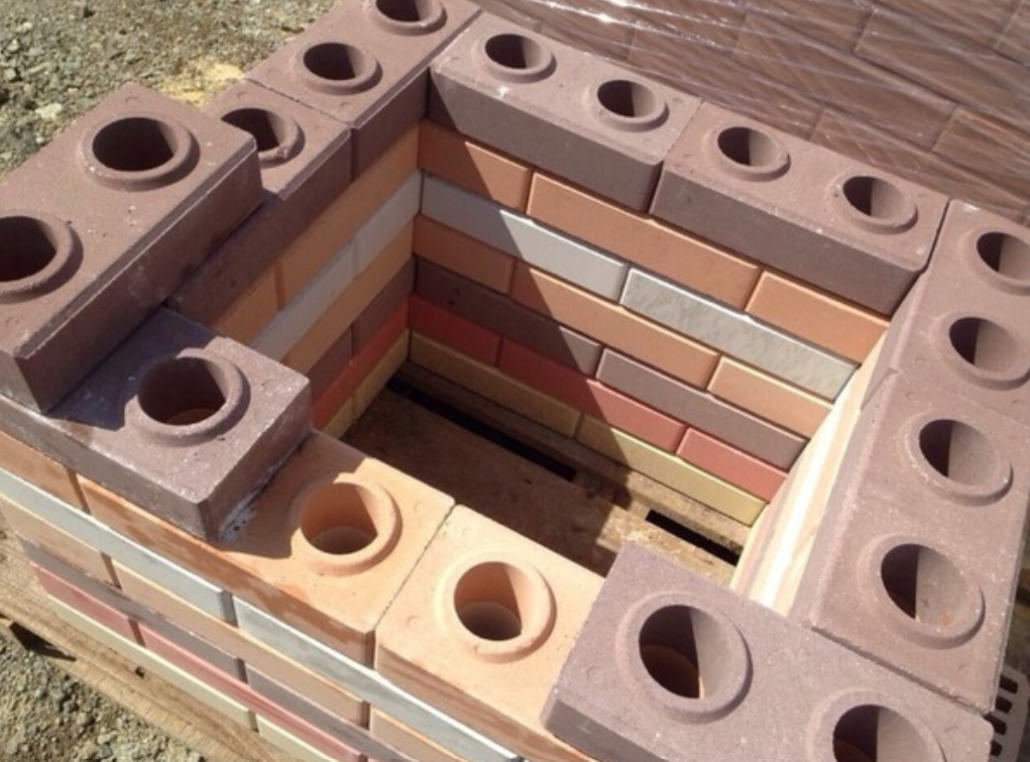
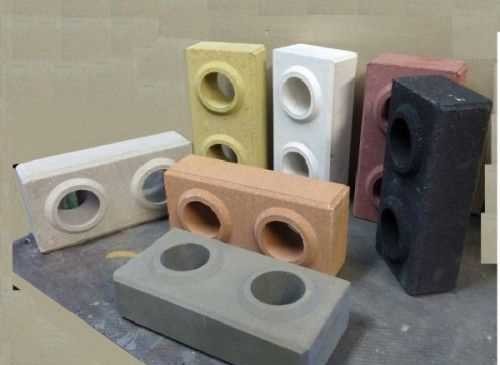
The Lego brick is equipped with a "tongue-and-groove" system that ensures precise alignment and even masonry. Two through-holes help reduce weight, allow alignment, and provide space for utility installation. The geometry of the brick is accurate to the millimeter, simplifying the laying process and making it accessible even to non-professionals.
⚙️ Constructor Principle
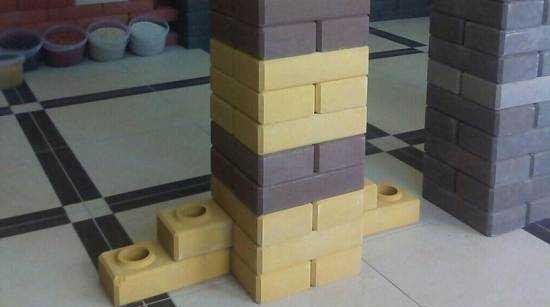
The blocks connect like building set pieces — quickly, precisely, and without mistakes. The geometry ensures automatic alignment without special skills.
🧩 Material Potential
Thanks to its precise shape and variety of colors, Lego bricks can be used both in load-bearing construction and in decorative architecture
🧠 Modular principle
Blocks connect like construction set elements, quickly, precisely and without errors. The geometry ensures automatic alignment without special skills.
🪨 Mineral base
The composition includes crushed mineral materials such as limestone, dolomite and screenings, which ensures strength and durability.
🎨 Variety and aesthetics
A wide range of shapes, colors and textures allows bricks to be used for facades, interiors and fences without additional finishing.
🧱 Where is Lego Brick Used?
Thanks to its universal shape and high strength, Lego brick is suitable both for private housing construction and for decorative architectural solutions.
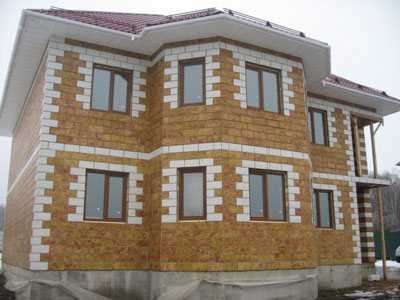
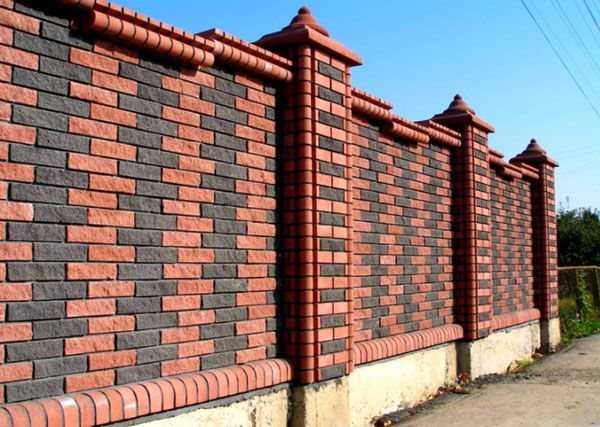
Private houses, gazebos, summer kitchens, and barbecue areas — Lego brick is widely used in the construction of small structures where easy laying and aesthetics without additional finishing are important.
It is ideal for partitions and load-bearing walls, columns and supports, as well as permanent formwork in monolithic construction. It is also used for building fences and decorative enclosures, which makes it popular in landscape architecture and among private builders.
Thanks to the ability to choose color and texture, the material is also used in small architectural forms (SAF), such as garden elements and outdoor decor.
🏗️ How Are Lego Brick Houses Built?
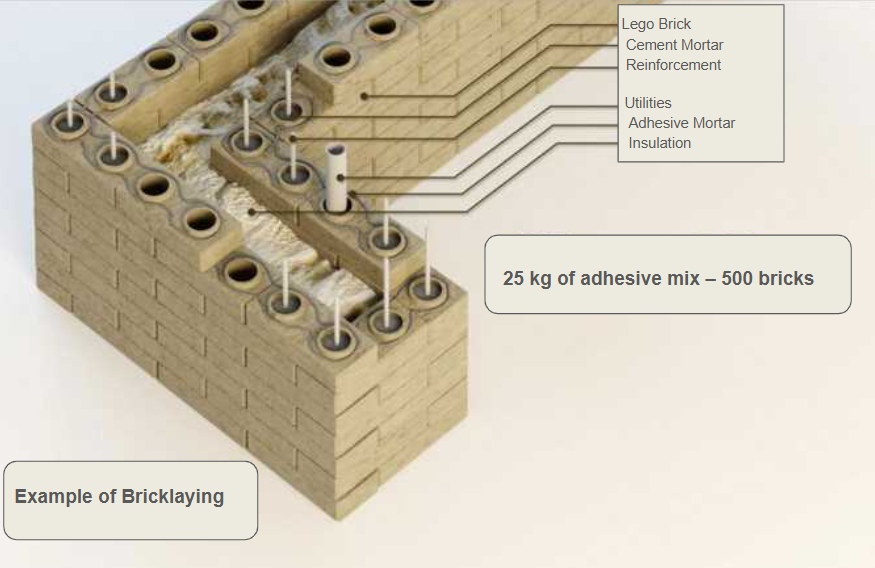
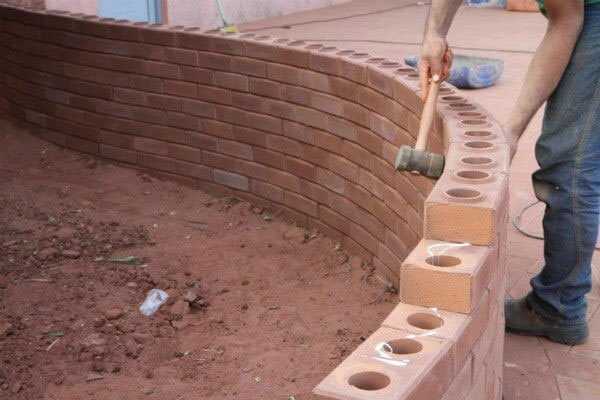
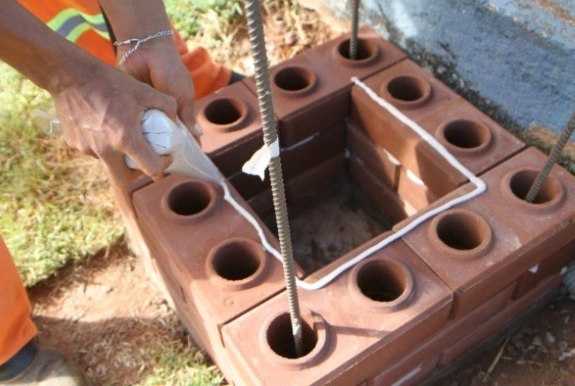
Modern technology makes it possible to build energy-efficient houses with high strength. Masonry is laid in two rows with insulation placed between them. Vertical cavities are reinforced with rebar and, if necessary, filled with concrete.
- Two parallel rows of bricks;
- Insulation between them (polystyrene foam, expanded clay, polyurethane);
- Vertical reinforcement through internal cavities;
- Finished facade with no need for cladding.
This design ensures resistance to temperature fluctuations, increased humidity, and retains heat throughout the year.
🏡 Advantages of Brick Houses
Why brick houses remain the No. 1 choice for decades ahead
⏳ Durability
A brick house can last 100–150 years with proper construction technology. It withstands freeze-thaw cycles while maintaining its strength for decades.
🔥 Fire Safety
Even in the event of a fire, brick walls retain their shape and load-bearing capacity, providing additional protection for residents.
🪳 Protection from Pests and Mold
Brick is resistant to insects and fungi, making it more hygienic and durable compared to wood.
🏗️ Strength
Thanks to its high load-bearing capacity, brick is widely used in the construction of multi-story buildings and structures with increased loads.
🌦️ Climate Resistance
Brick walls are resistant to precipitation, wind, and temperature fluctuations. This makes them especially reliable in regions with harsh winters and humid climates.
💨 Natural Ventilation
Brick "breathes," providing a healthy indoor climate without the airtightness typical of panel houses.
🌡️ Thermal and Sound Insulation
Massive brick walls retain warmth in winter and coolness in summer for a long time, while effectively reducing street noise.
🎨 Aesthetics and Variety
A wide choice of colors, textures, and shapes allows for original architectural solutions — from classic to modern designs.
🧱 Versatility in Finishing
Brick is compatible with most finishing materials: plaster, tiles, wood, decorative panels.
🌱 Eco-friendliness
Brick is made from natural components and is safe for both human health and the environment.
🧱 History and Evolution of Lego Brick
📚 Origin Story
The history of Lego brick begins in Denmark, where carpenter Ole Kirk Christiansen created the first toy constructor in 1932. In 1949, a construction brick based on the same principle appeared. By the 1950s, the technology had already spread to the construction industry.
🧱 Modern Lego Brick
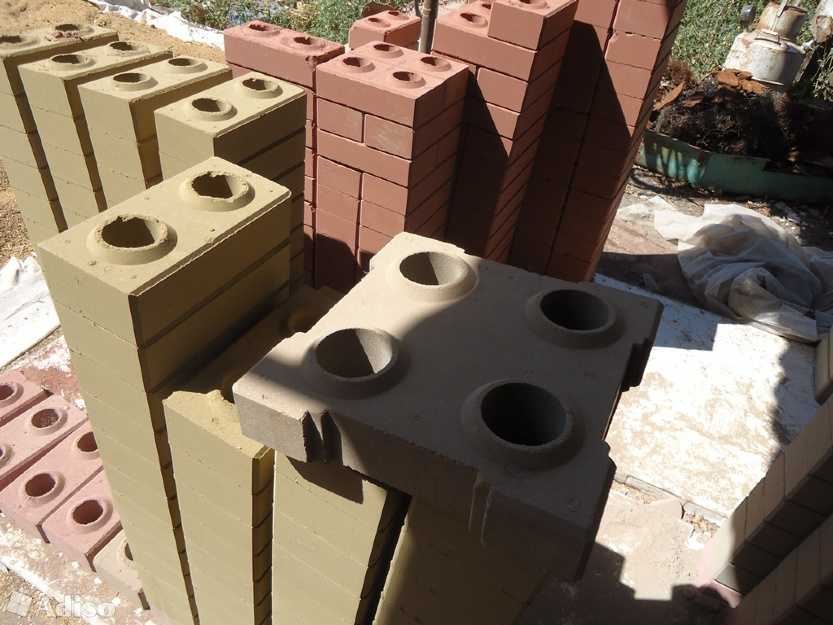
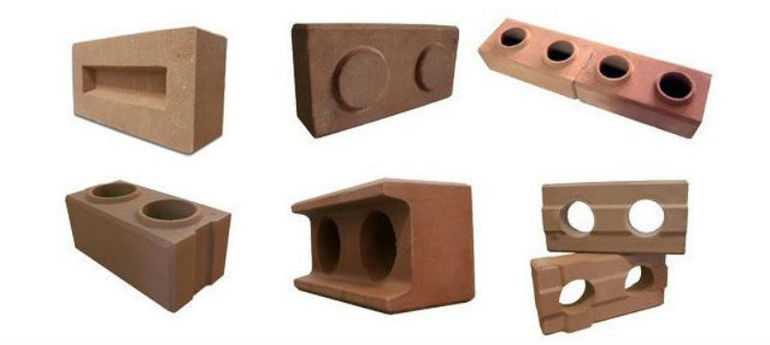
This is a durable block in the form of a parallelepiped, produced by pressing. The top part has round protrusions, and the bottom has recesses for a tight fit. Some models include side centering elements for perfect alignment.
📐 Design and Characteristics of Lego Brick
Dimensions, shape, and key parameters of strength and thermal efficiency
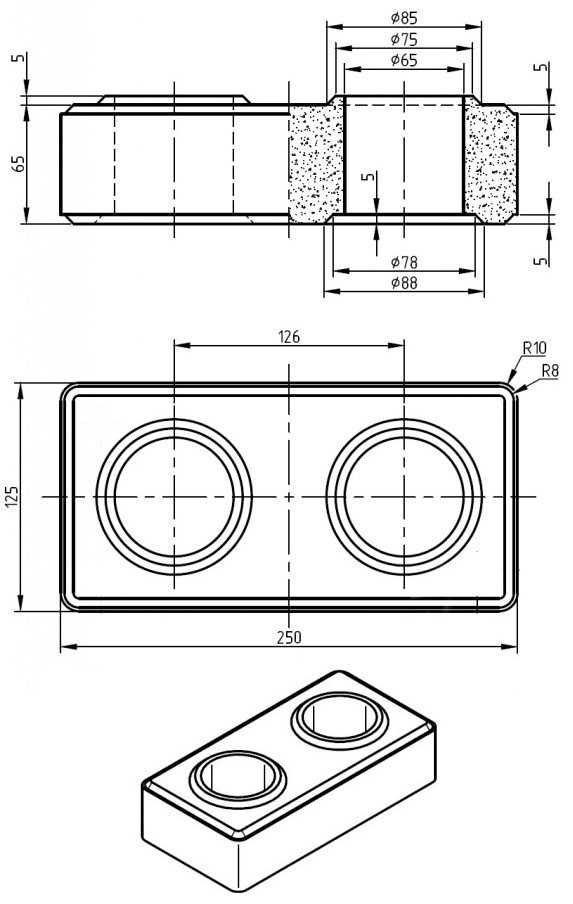
Shape and Jointing: Lego brick is equipped with two rounded studs that provide precise fitting using the "tongue-and-groove" principle. This allows walls to be assembled without complex adjustments and minimizes the risk of misalignment.
Purpose: Suitable for constructing both partitions and load-bearing walls. Thanks to its strength and geometry, the brick can be used in projects of any complexity.
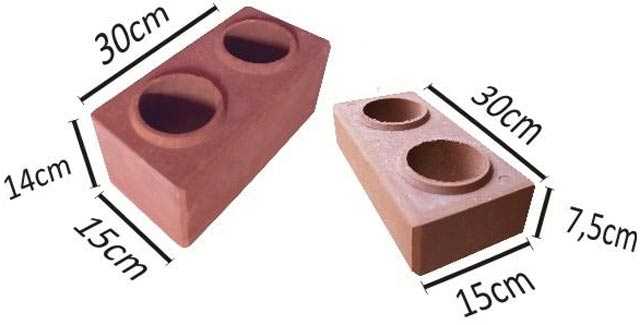
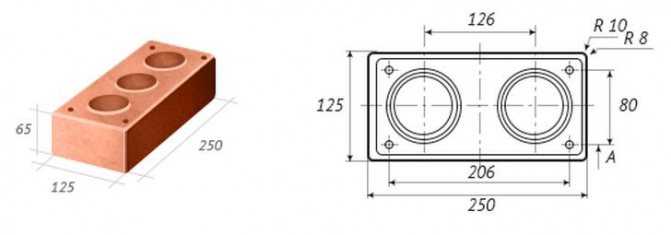
Dimensions and Weight: Standard dimensions are 250 × 125 × 45–80 mm, with each unit weighing 3.5–4 kg. Each block has two holes with a diameter of 65 mm, improving bonding and making it easier to install utilities.
Frost Resistance: The material withstands more than 200 freeze-thaw cycles without structural damage. This makes it particularly reliable in cold climate zones.
Density: Approximately 1550 kg/m³ — the optimal balance between strength, load resistance, and structural weight.
Thermal Conductivity: Ranges from 0.4–0.45 W/(m·K), which helps effectively retain heat indoors and reduces energy costs for heating.
📏 Dimensions and Structural Features
Geometry, precision, and standards — everything you need to know
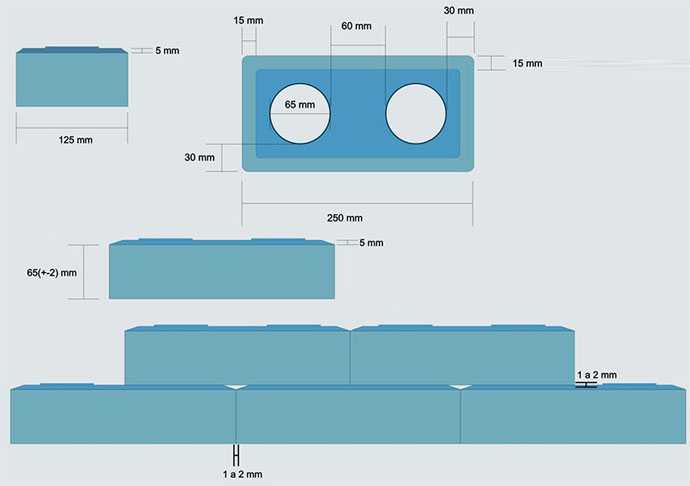
Standard Dimensions: A classic Lego brick has dimensions of 250×125×65 mm. It is equipped with two round holes of 65 mm in diameter, positioned 60 mm apart. The top surface features studs 5 mm high, ensuring precise alignment during masonry.
Joint Precision: For stable and aesthetic masonry, it is important to maintain accurate geometry: the distance from the edge to the center of the hole is 30 mm, and the positioning angles of the studs and grooves are exactly 15 mm. Even minimal deviations can affect wall alignment.
🧱 Lego Brick vs Classic: An Objective Comparison
How the innovative block differs from traditional brick
| Characteristic | Classic Brick | Lego Brick |
|---|---|---|
| Density | 1600–1900 kg/m³ | 1550 kg/m³ |
| Strength Grade | M150 | M150 |
| Frost Resistance | 35–40 cycles | 35–40 cycles |
| Brick Weight | 3.3–4 kg | 3–3.5 kg |
| Water Absorption | 6–14% | 5–6% |
| Thermal Conductivity | 0.5–0.8 W/(m·K) | 0.4–0.56 W/(m·K) |
Despite similar density indicators, Lego brick is lighter and easier in terms of logistics. It is transported faster, lifted more easily to upper floors, and reduces the load on the foundation. Lower water absorption makes it more resistant to moisture and temperature fluctuations — ideal for unstable climates.
An additional advantage is the ability to set up production directly at the construction site, which is especially relevant in peak season when factory deliveries are delayed. On-site production means savings and flexibility without compromising quality.
🏠 Operational and Technological Features
🏠 Operational Advantages
- Reduced thermal conductivity
- High frost resistance
- Minimal water absorption
- Increased wear resistance
The unique design with holes and a “stud–groove” system increases the building’s stability, including resistance to seismic loads. Using frost-resistant tile adhesive makes the masonry process easier and cheaper. The strength of such masonry is about 70% higher than that of silicate brick, while the load on the foundation is significantly lower.
⚙️ Technological Features
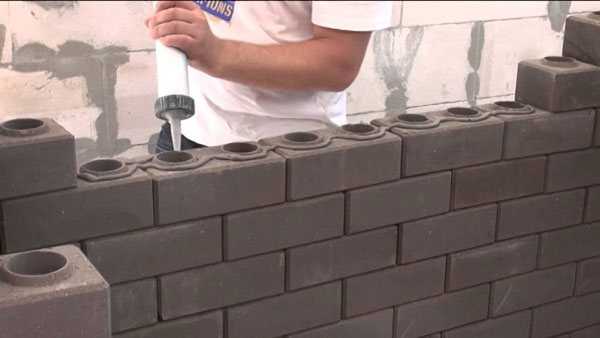
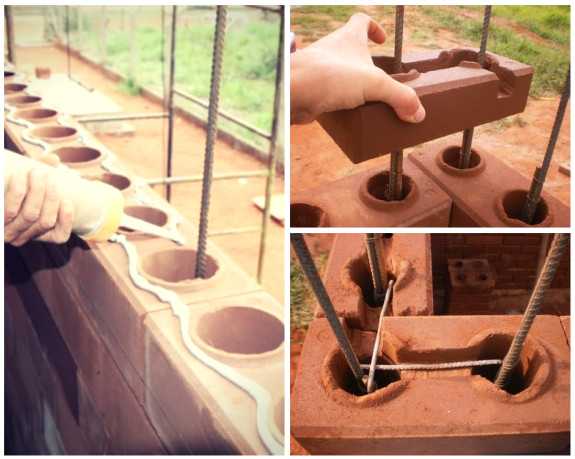
Frost-resistant tile adhesive is used in masonry, which can be applied with a gun, roller, or even a homemade dispenser. The holes can be used for laying electrical wiring, inserting reinforcement, or filling cavities with concrete to strengthen the structure. In terms of strength, Lego brick can surpass ceramic brick by up to 50%, while still being lighter.
💸 Lego Brick Masonry — Savings and a Start Without Experience
Easy installation and real financial benefits even for beginners
No experience — no problem. Thanks to the “stud–groove” connection system and precise geometry, Lego brick can be laid independently. It’s almost like assembling a building set: accuracy, a level, and a bit of practice are all you need.
Reduced costs. In the Czech Republic, masonry of 1 m³ costs around 4,000 CZK (~160 EUR), while in Germany it ranges from 250 to 400 EUR. By doing 40 m³ yourself, you save:
- 🇨🇿 up to 160,000 CZK (≈6,400 EUR)
- 🇩🇪 up to 16,000 EUR or more
Start small. If you are unsure, begin by hiring a specialist to lay the first row. This is the foundation of the entire masonry. After that, you can continue on your own using video guides and diagrams.
Self-learning made easy. The internet is full of detailed video instructions explaining every stage of masonry. This makes Lego brick an excellent solution for those who want to build a house themselves or start a new business.
Lego brick is not just a convenient material. It’s an opportunity to save money, learn something new, and build a house with your own hands at minimal cost.
🤝 Partnership and Supply
We are open to long-term cooperation with manufacturers, construction companies, architects, and distributors. Based on our ECOS technology, it is possible to:
- 🏭 OEM production and contract blending using the ECOS licensed technology
- 📦 Supply of pre-packed dry mixes under your brand — certified according to ČSN and CPR
- 🧪 Technical support and customization tailored to local regulations, climate, and raw materials
- 🌍 Establishing local production under a franchise or licensing model
- 🔎 Participation in tenders and green programs thanks to EPD, CPR, and REACH compliance