ECOS SYSTEM: engineering wall system
based on 4Bricks Core and ECOS Structural Infill
ECOS SYSTEM is a project engineering direction of ECOS combining hyper-pressed mineral elements, vertical channels, reinforcement, Structural Infill and engineering utilities into a controlled wall system.
ECOS SYSTEM is at the stage of engineering development, design verification, testing and preparation for pilot implementation. Statements regarding load-bearing capacity, number of storeys, seismic resistance and regulatory compliance require separate engineering calculations and confirmation for each specific project. The system is considered as a potential solution for low-rise and selected mid-rise construction formats following engineering calculations, testing and project adaptation.
Key Principle
Continuous vertical load-bearing rods are formed within the masonry, acting as a distributed monolithic frame integrated into the mineral block shell.
System Architecture
ECOS SYSTEM integrates 4Bricks hyper-pressed mineral blocks, an internal vertical reinforced frame, ECOS Structural Infill mineral filler, and integrated vertical engineering channels into a single structural system.
4Bricks Core
An engineered hyper-pressed mineral block with two vertical Ø75 mm channels, forming the load-bearing shell of the wall and the base for the reinforced monolithic core.
Reinforced Frame
Continuous vertical rods inside the masonry form a distributed monolithic frame and carry the primary structural loads.
Structural Infill
The mineral structural filler ensures the combined performance of the block shell and the internal reinforcement.
Engineering Channels
Vertical channels allow integration of engineering communications without cutting grooves or compromising the load-bearing structure.
Types of Vertical Channels
The system provides differentiation of vertical channels according to their functional purpose in order to preserve the load-bearing capacity of the wall and integrate engineering systems.
Load-Bearing Channel
The channel is reinforced and completely filled with ECOS Structural Infill, forming a monolithic vertical load-bearing rod.
Combined Channel
Combines reinforcement with the placement of engineering communication in a protective sleeve with partial channel filling.
Engineering Channel
Used exclusively for the placement of engineering communications and does not participate in the load-bearing function of the structure.
Integration of Engineering Systems
Structural Limitations
- Horizontal channels inside the block are not permitted
- Floor slabs must function as a rigid horizontal diaphragm
- Reinforcement calculations are mandatory for buildings above 2 floors
- Use of channels for utilities is allowed only if confirmed by the structural calculation model
Platform Architecture ECOS
LICENSE
PRESS
MIXES
SYSTEMS
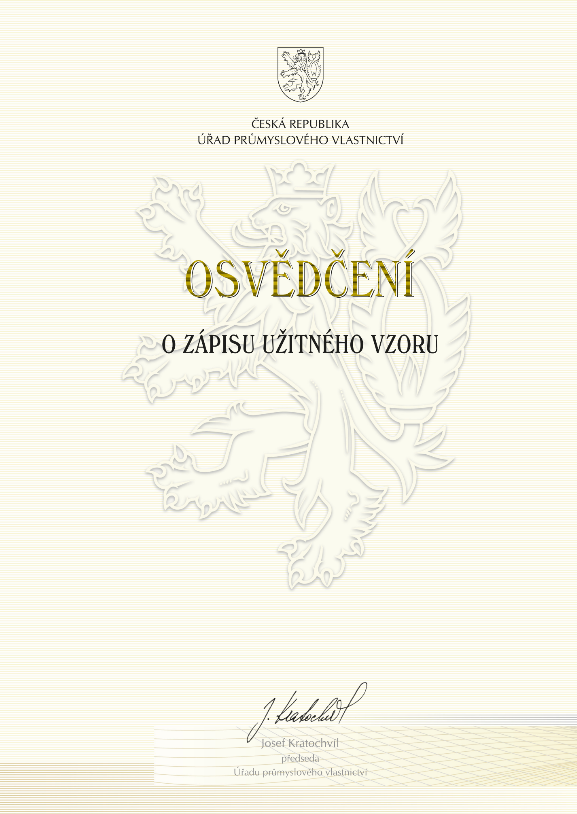
Utility Model Protection
The ECOS technology platform includes solutions protected by a registered utility model and a confidential know-how system.
Utility model protection covers specific engineering solutions. Detailed formulations, process parameters, production modes and controlled ECOS components are not disclosed in public materials.
Certification and Regulatory Status
ECOS Dry Mix
The product is undergoing national certification in the Czech Republic in accordance with Government Regulation No. 163/2002 Sb. as a general construction material.
- Category: dry construction mixture
- Regulatory framework: 163/2002 Sb.
- ČSN EN 998-1 / EN 998-2 — applicable standards for masonry and plastering mortars
- Status: official laboratory testing in progress
ECOS Hyper Press
The hyper-pressed product segment is designed to comply with EN 771-3 (concrete masonry units).
- Regulatory framework: EN 771-3
- CE marking — possible upon completion of conformity assessment procedures
- Status: regulatory validation and laboratory testing in progress
Full documentation package (TDS, DoP, test reports, SDS) is provided upon official request.
📎 Documentation & Technical Materials
ECOS SYSTEM documentation is provided upon official request and depends on the specific project solution, block version, reinforcement type, Structural Infill, engineering channels, calculation model and testing stage. Compliance documents are provided only for those products and versions of ECOS for which the relevant testing, verification or regulatory procedures have been completed.
The following may be prepared for ECOS SYSTEM:
- 📄 Technical Data Sheet (TDS) ⬇️ — subject to an approved product version
- 📜 Declaration of Performance / DoP ⬇️ — if applicable after completion of relevant procedures
- ✅ Laboratory Test Reports ⬇️ — only for tests actually conducted and completed
- 🌍 EPD / LCA Materials ⬇️ — after completion of the relevant environmental assessment
- 📘 CZ Certificate of Conformity ⬇️ — after completion of the conformity confirmation procedure, if applicable
- 📐 System technical description and project drawings
- 🧮 Calculation materials and Structural Infill documentation
- 🏗 Pilot implementation recommendations and regulatory assessment for a specific project
Documents confirming load-bearing capacity, number of storeys, seismic resistance and regulatory compliance are provided only after completion of the relevant engineering calculations, testing and project adaptation.
ECOS Dry Mix is undergoing review and documentation preparation within applicable regulatory procedures of the Czech Republic and the EU. CE marking, CPR, REACH and CLP requirements are determined by the specific product version, application scope and regulatory assessment results.
- 🔹 Status: undergoing official testing
- 🔹 Laboratories: TZÚS Praha, PAVUS, ITC Zlín
- 🔹 Category: general-purpose dry construction mix
- 🔹 Compatibility with CPR, CLP, REACH and upcoming ESPR standards — determined by product version
- 🔹 ECOS carbon profile is oriented toward GPP and LCA requirements (confirmed within validation process)
- 🔹 CE marking: determined by regulatory assessment results and applicable standards
Full documentation package (Technický list, DoP, Prohlášení o shodě, SDS, laboratory test reports, EPD) is provided upon official request within agreed cooperation, after completion of the relevant testing and validation procedures.
Detailed Technical Information
ECOS dry construction mixes are manufactured using precise component dosing and thorough mixing on specialized equipment. The production process is designed with a focus on environmental sustainability and energy efficiency — without high-temperature firing, unlike traditional cement production.
The technology is based on the principles of circular economy, ESG, and low carbon footprint, allowing its use within the framework of new EU regulations — CPR, ESPR, GPP.
Main stages:
- ✅ Loading of sand, mineral, and chemical components
- ✅ Accurate volumetric or weight dosing
- ✅ Homogenization in an industrial mixer
- ✅ Packaging into 25 kg bags
- ✅ Storage in dry conditions, protected from moisture
Product Name: ECOS Dry Mix
Full Name: Economical Composite Optimized System
Intended Use: masonry, plastering, repair works, floor screeds
Manufacturer: 4Bricks s.r.o., Nademlejnská 600/1, 198 00 Praha 9 – Hloubětín, Czech Republic
Contact: info@4bricks.eu
🧪 Composition (generalized)
- River sand of fine fraction (< 0.5 mm)
- Mineral components of technogenic origin
- Functional reagent additive (in microdoses)
- Without Portland cement or ≤ 4% — in certain versions of the product
Part of the composition is presented in generalized form to protect the ECOS formula
🚨 Hazards and protection
- CLP Classification: Eye Irrit. 2 (H319)
- Recommended PPE: safety glasses, gloves, mask (when working in dust)
- If in eyes: rinse for at least 15 minutes, seek medical attention if necessary
📦 Storage conditions
- In original sealed packaging
- Recommended temperature: from +5 °C to +30 °C
- Store in a dry, well-ventilated area
⚗️ Main Properties
- Appearance: gray-beige homogeneous powder
- pH of aqueous solution: 10–12
- Bulk density: 1.3–1.5 g/cm³
- Water solubility: partial
- Flash point: none — non-combustible product
🌿 Ecology and Disposal
- The composition contains no toxic substances and is not subject to bioaccumulation
- Should be disposed of as inert construction waste
- EWC code: 17 01 07 — mixtures of concrete and sand not containing hazardous substances
🚚 Transport and Regulations
- Not classified as dangerous goods (ADR/RID/IMDG/IATA)
- Not subject to mandatory REACH registration
- Fully compliant with CLP and REACH requirements
Where are ECOS mixes used?
🏗 Masonry and Plastering Works
Used in the construction of load-bearing and partition structures, as well as in base and finish coatings. Compliant with ČSN EN 998-1/2 and suitable for environmentally certified projects.
🏠 Private Construction
Suitable for cottages, terraces, extensions, and renovations. Thanks to the low carbon footprint, ECOS mixes are an ideal solution for energy-efficient homes and participation in Zelená úsporám programs.
🏢 Commercial and Façade Solutions
Used for façades and exterior finishing of commercial facilities. Suitable for participation in green tenders and projects meeting GPP, EPD, and CPR (2026 version) requirements.
🪨 Substrate Preparation
Optimal for leveling rough floors, screed bases, and preparatory layers. Free from toxic substances, safe for indoor use, and compliant with REACH.
🔬 Experimental Applications
ECOS materials are being tested in research laboratories to develop new composites and cement alternatives. Relevant for projects under ESPR and ESG initiatives.
🧪 Innovative Formats
Used in 3D printing, prefabricated panels, lightweight blocks, and other modern solutions. ECOS is integrated into sustainable development construction and supported by subsidies from EFEKT III and ENERG Praha.
Advantages of ECOS Technology
🔬 Scientific & engineering basis
ECOS is built on applied research and repeated testing. An optimization methodology for mineral compositions has been developed for defined performance targets.
🌍 Low-carbon profile
Reduced clinker dependency and the option to use secondary mineral resources. Carbon indicators depend on product version and comparison baseline.
💰 Raw material efficiency
Composition optimization can reduce material and energy input depending on local feedstock and project requirements.
📄 Regulatory compatibility
Developed with ČSN and framework principles of CPR / ESPR in mind. Compliance is established through testing and validation procedures.
🏭 Production implementation
Integration into a partner line, production licence, OEM, pilot or manufactory production. Production and quality control conditions are defined by the technical documentation of the specific product version and the contractual cooperation model.
🔒 Know-how protection
Formulations and key process parameters are protected. Technical characteristics and validation status are provided within cooperation.
🤝 Partnership & Implementation
4Bricks is open to cooperation with selected partners in the following formats:
- 🏭 Integration of ECOS technology into existing production lines
- 📜 Production licence for manufacturing ECOS-based materials at an approved site
- 🔧 OEM / contract manufacturing of ECOS-based materials
- 🧪 Pilot production and validation projects
- 🏗 Manufactory production of small and medium batches
- 🏭 Industrial implementation of ECOS dry mixes and hyper-pressed products
- 📜 Regional technology licensing
- 🔬 Cooperation with testing and research organisations
- 🌍 Controlled technology transfer for approved partners